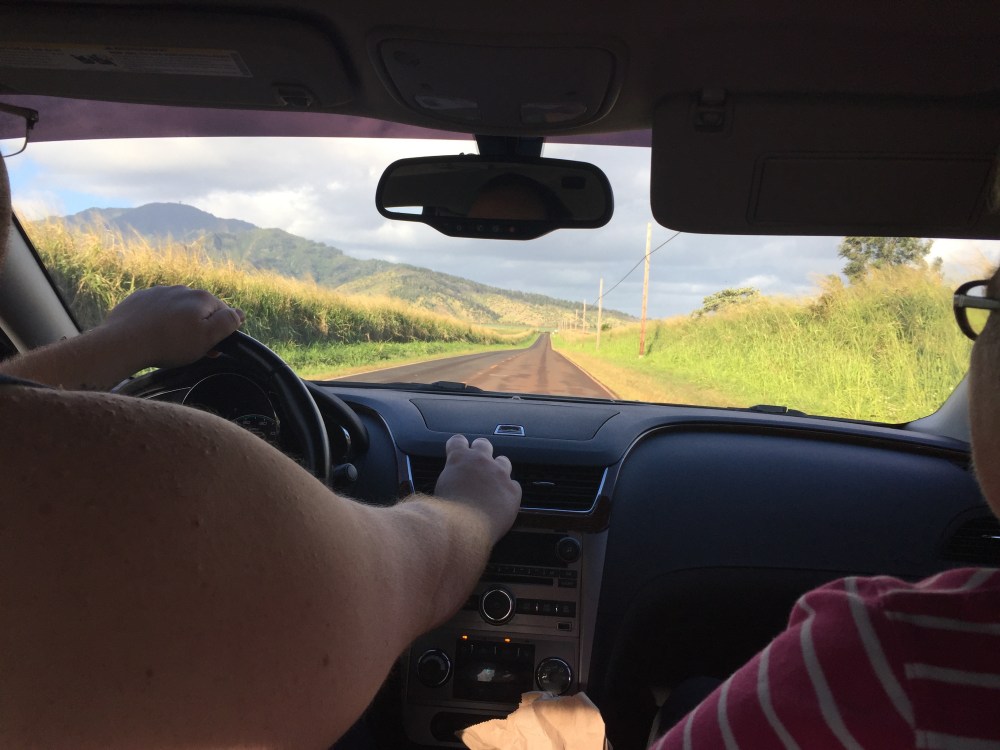
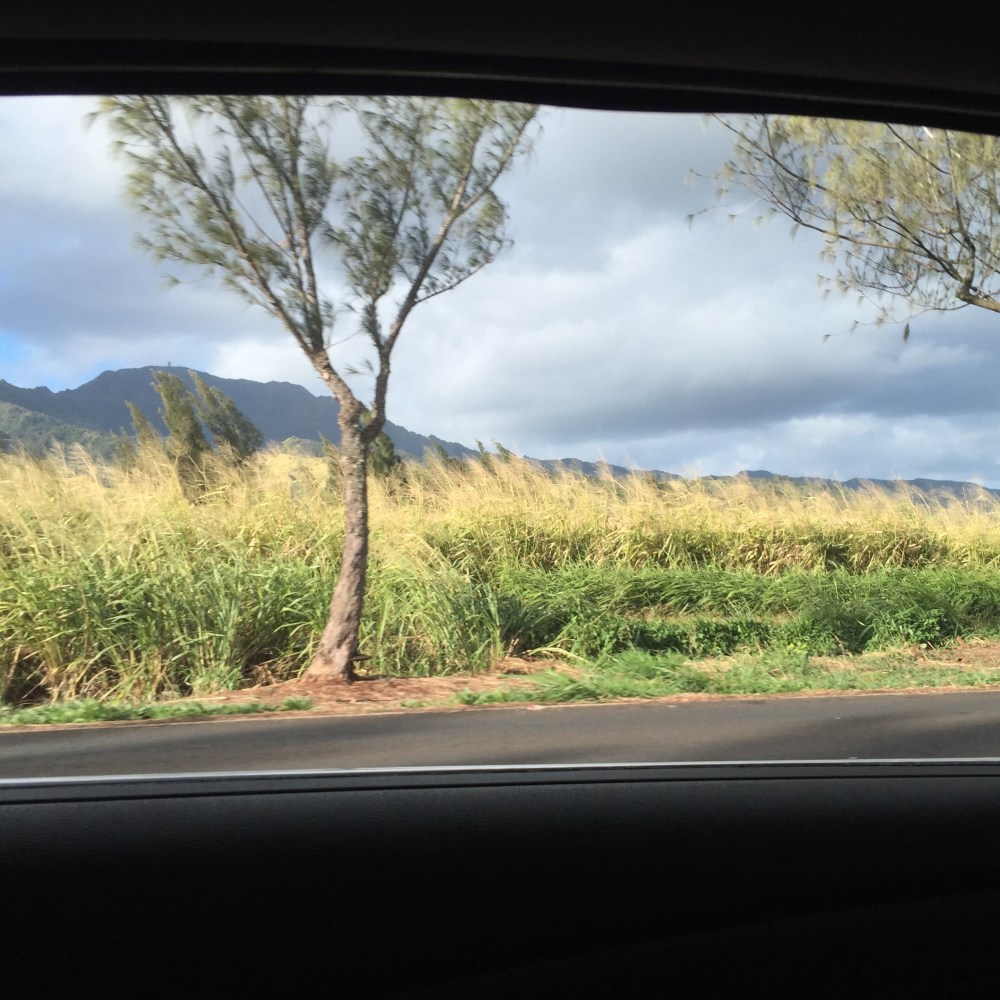
Kaʻena Point is the westernmost tip of land on O’ahu. Yesterday, my nephew Brian drove my sister Glenda and me almost all the way there. We traveled a rural two-lane blacktop through the agricultural lands of Dole, Monsanto and Kamehameha Schools, for 20 minutes or so, from Brian’s apartment in Wahiawa.
Brian let us out at the graveled parking lot where Farrington Highway terminates, a bit beyond Dillingham Airfield on the island’s north shore. From there, we hiked on to Ka’ena State Park, accessing it from the boulder and pothole peppered dirt footpath that picks up where the paved road and the small parking lot end.
I’ve read that the area was named after a brother or cousin of Pele, with kaʻena meaning “the heat” or “red-hot” in Hawaiian. In truth, it can get quite hot out there, but yesterday spritzed us with a refreshing morning mist and relatively cool February temperatures. Glenda and I barely broke a sweat during the 7-mile hike out to the island’s tip and back.


Though I did the best I could with my iPhone camera, it’s impossible to capture the indescribable beauty of this place. The State of Hawai’i has designated Ka’ena Point as a Natural Area Reserve to protect nesting Laysan albatrosses and other seabirds, Hawaiian monk seals, and fragile native vegetation. The unspoiled stretch is pristine and absolutely breathtaking.
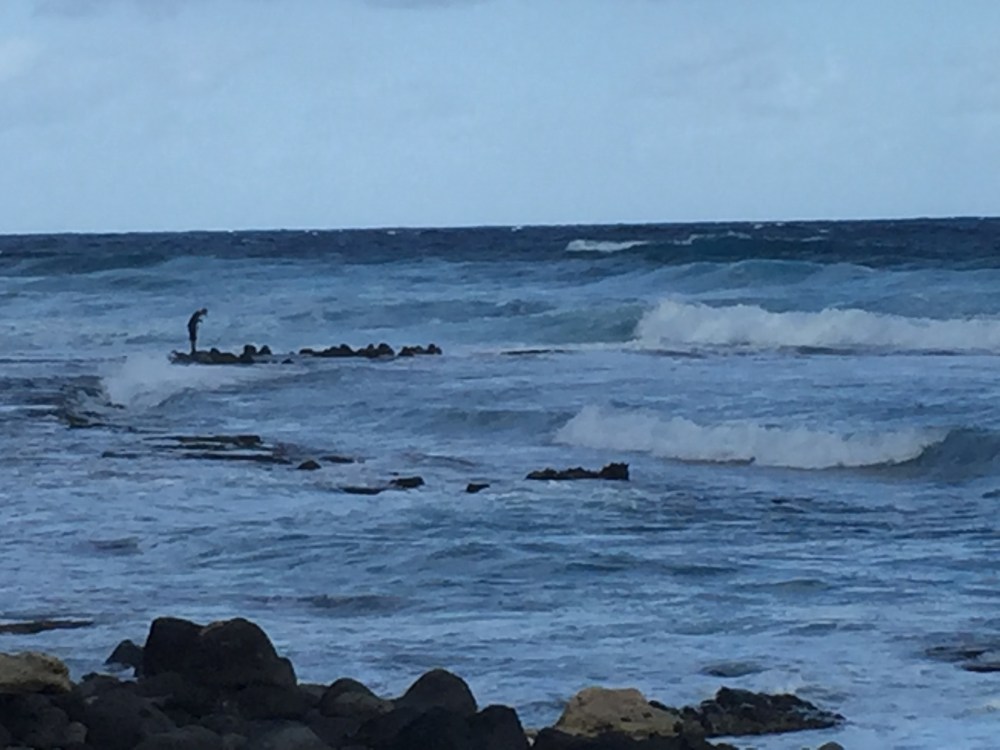
Private fishing spot.
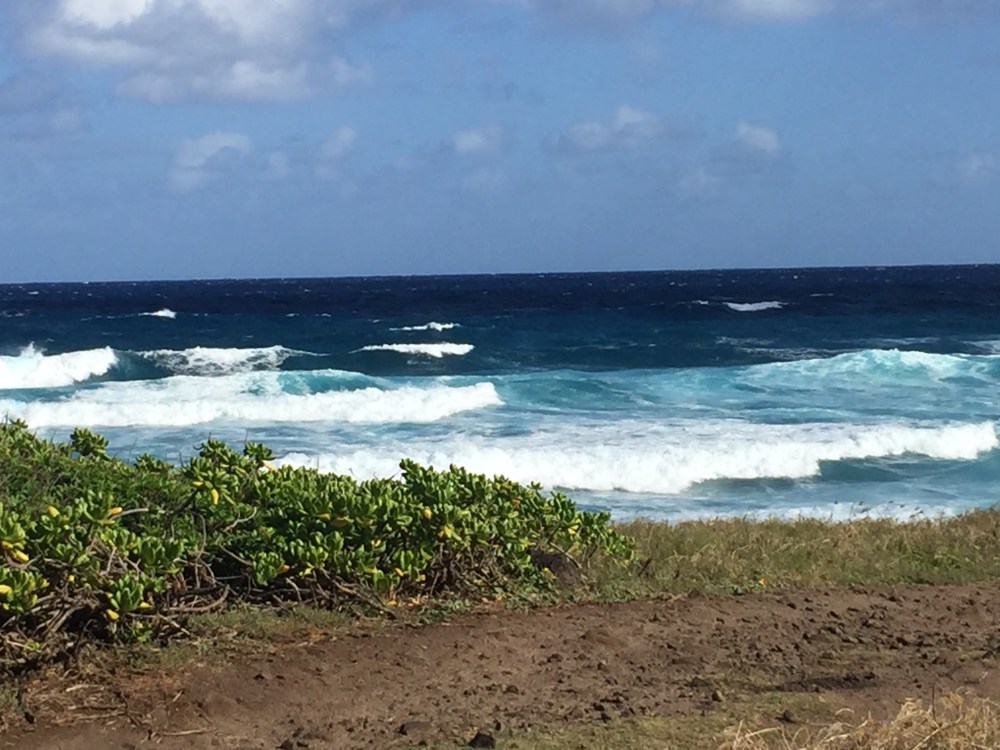
At least three shades of Pacific Ocean blue.
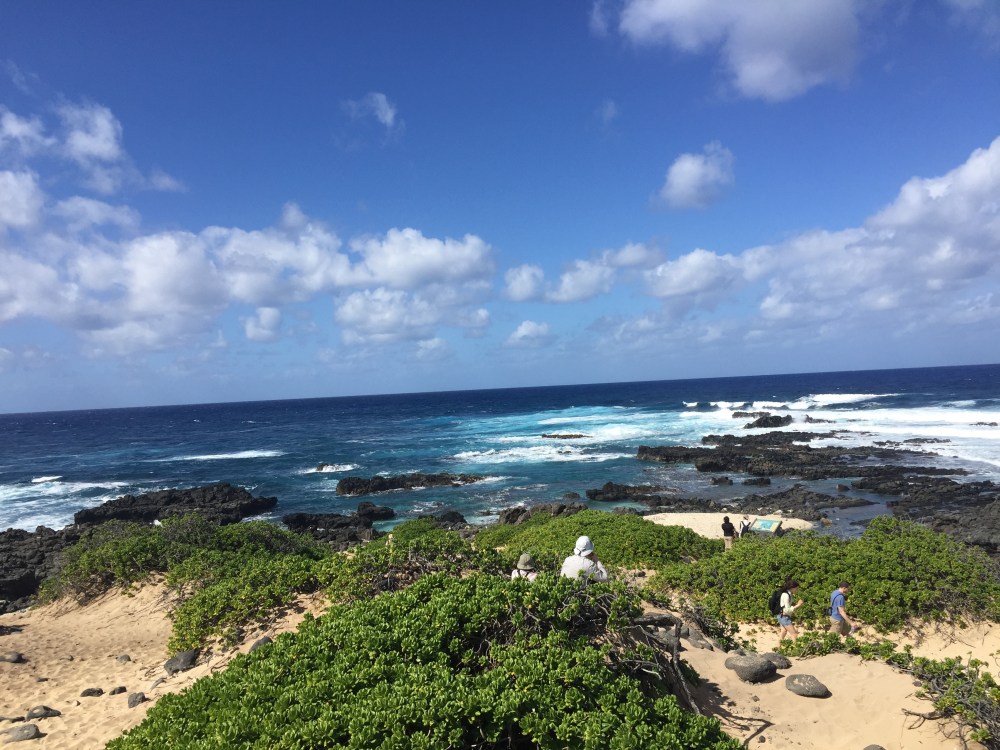
Park visitors overlook the lava rocks leading to the ocean.
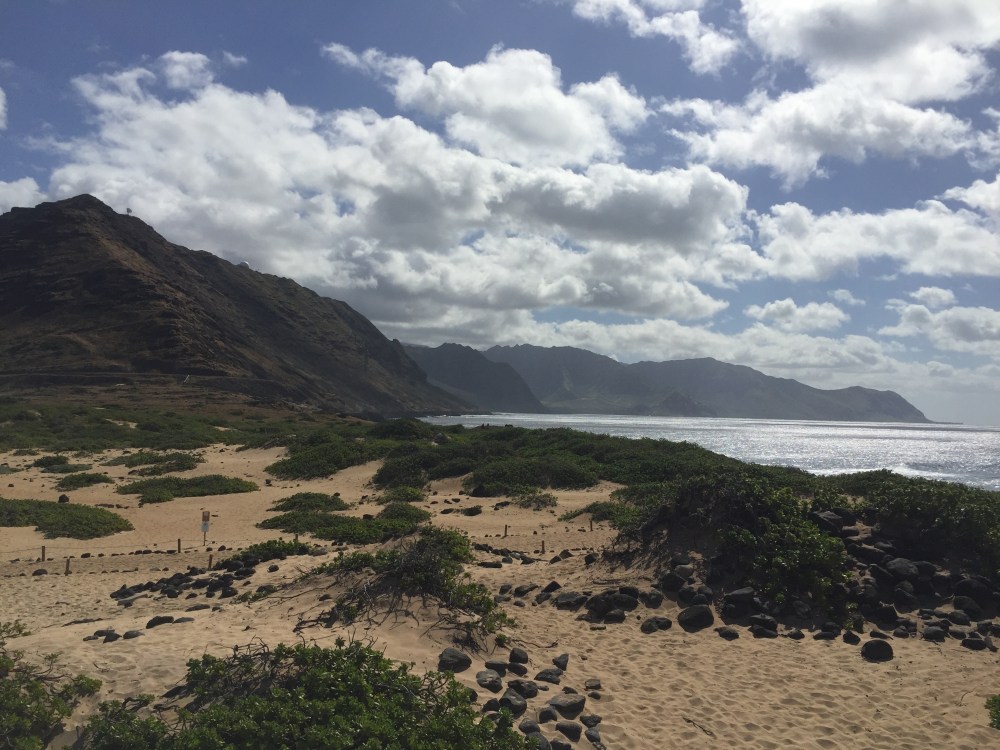
View from WW2 military pillbox down the western side of the island.
Before Dad’s second tour of duty in Hawai’i (during my first and second grade elementary school years) we were stationed for a brief time on Midway Island, long before Midway was ever designated a wildlife refuge. Midway is one of the most remote coral atolls on earth, but precisely because of its remote location in the Pacific, it became a strategic fulcrum for defense operations. That’s what took us to Midway – where our little sister Lisa was born – and where we first saw the Laysan albatross. The Laysan is a large, black and white seabird that ranges across the Pacific Ocean, and now has a growing refuge at Ka’ena Point.
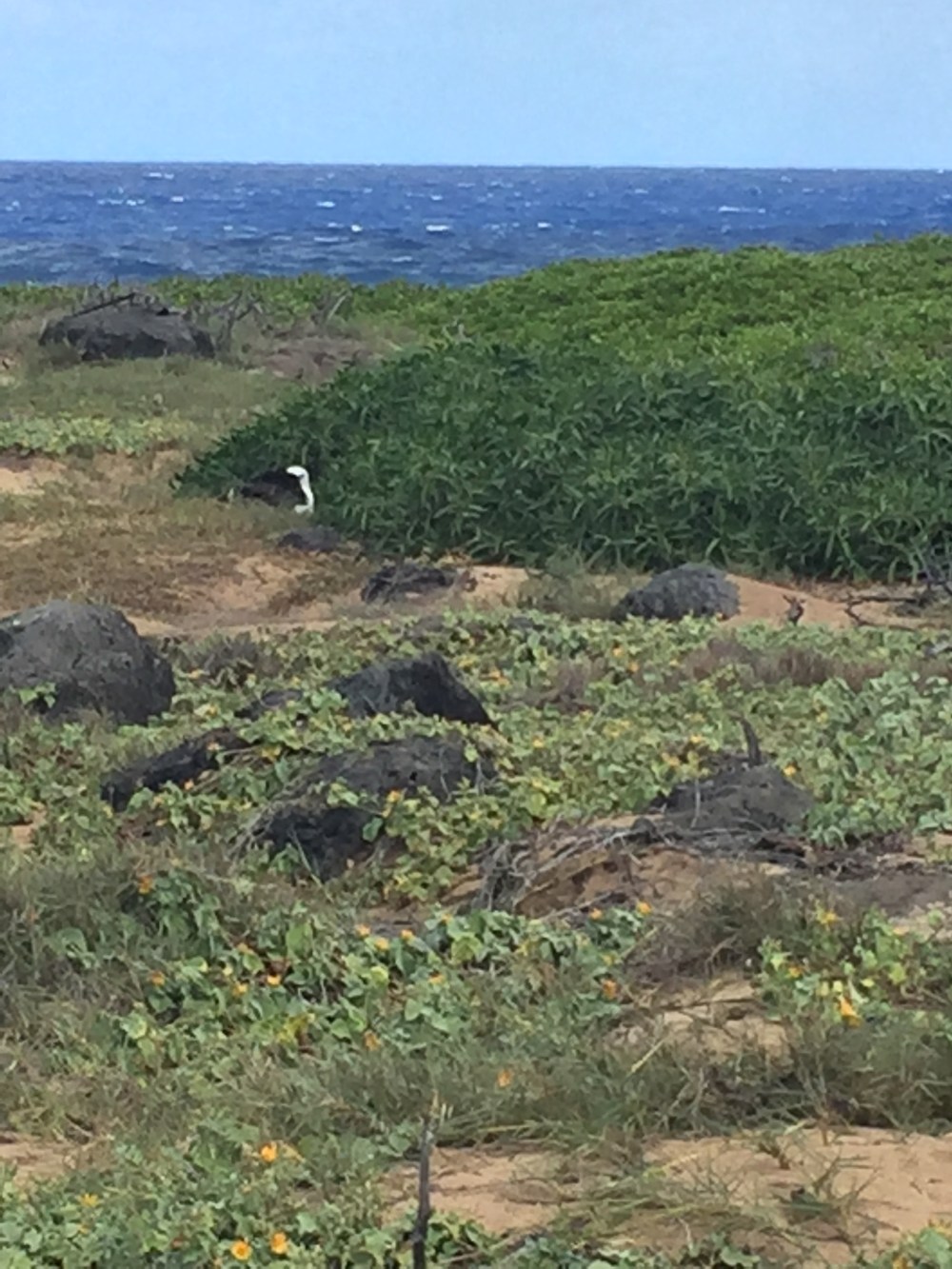
Black and white Laysan albatross nesting at Ka’ena Point.
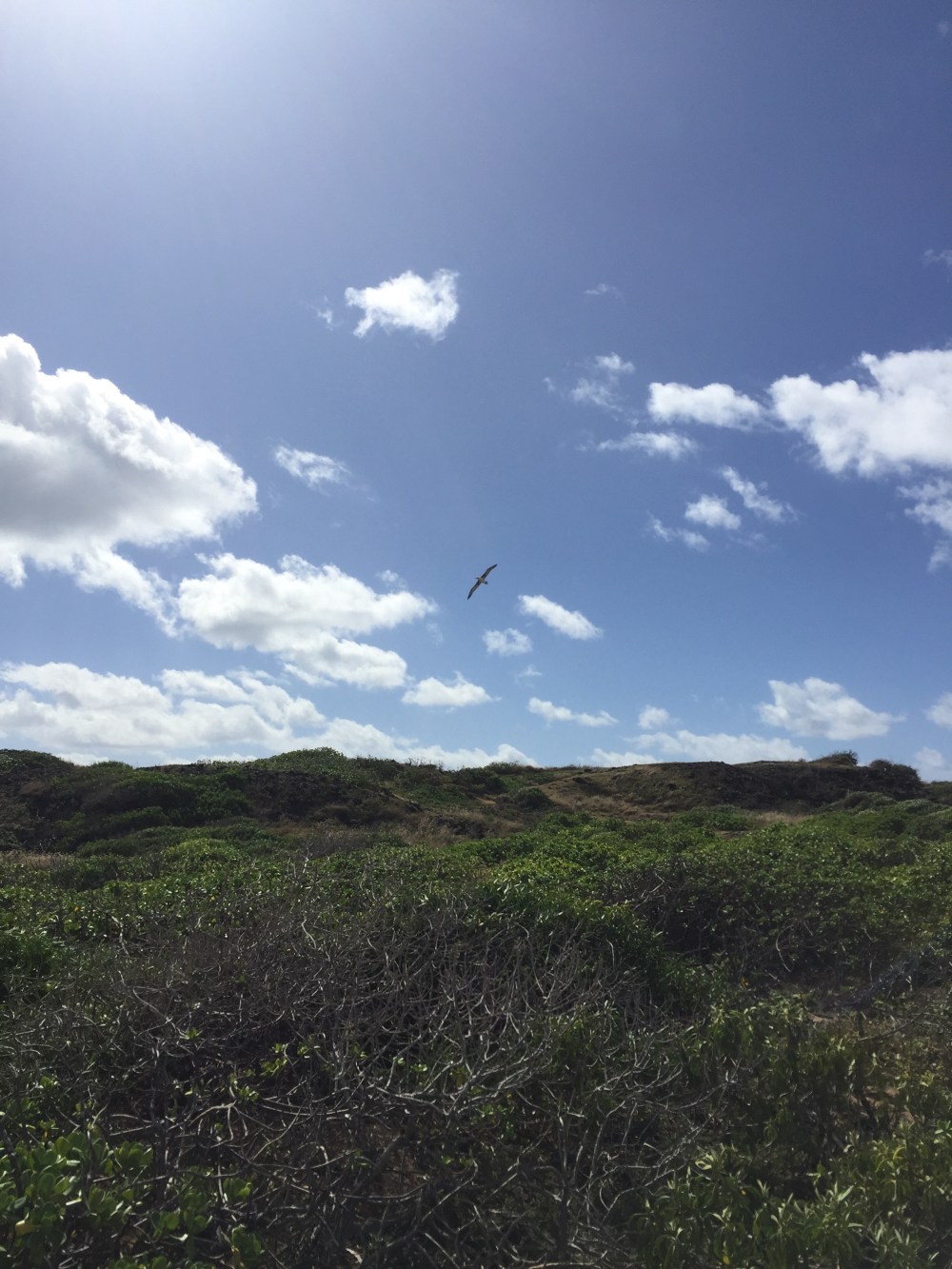
On my first visit to this park a couple of years ago, I saw not a single albatross, but yesterday, Glenda and I saw many. During our brief time on Midway as children, we called the Laysan albatrosses “gooney birds”, owing to a rather goofy-looking mating dance and spectacularly awkward crash landings. This visit though, I caught one in mid-flight. There was nothing gooney or goofy about it. It was completely graceful and awesome – well worth a 7-mile hike to this lonely stretch of land, where the bird population has increased 25 percent since the predator-proof green mesh fence was installed in 2011.
How native Hawaiians feel about the conversion of Ka’ena Point to a wildlife refuge, I can’t say, given this spot’s significance in ancient Hawaiian lore. Ka’ena Point was considered the sacred jumping point (leina a ka uhane) from which souls purportedly leapt to the afterlife.
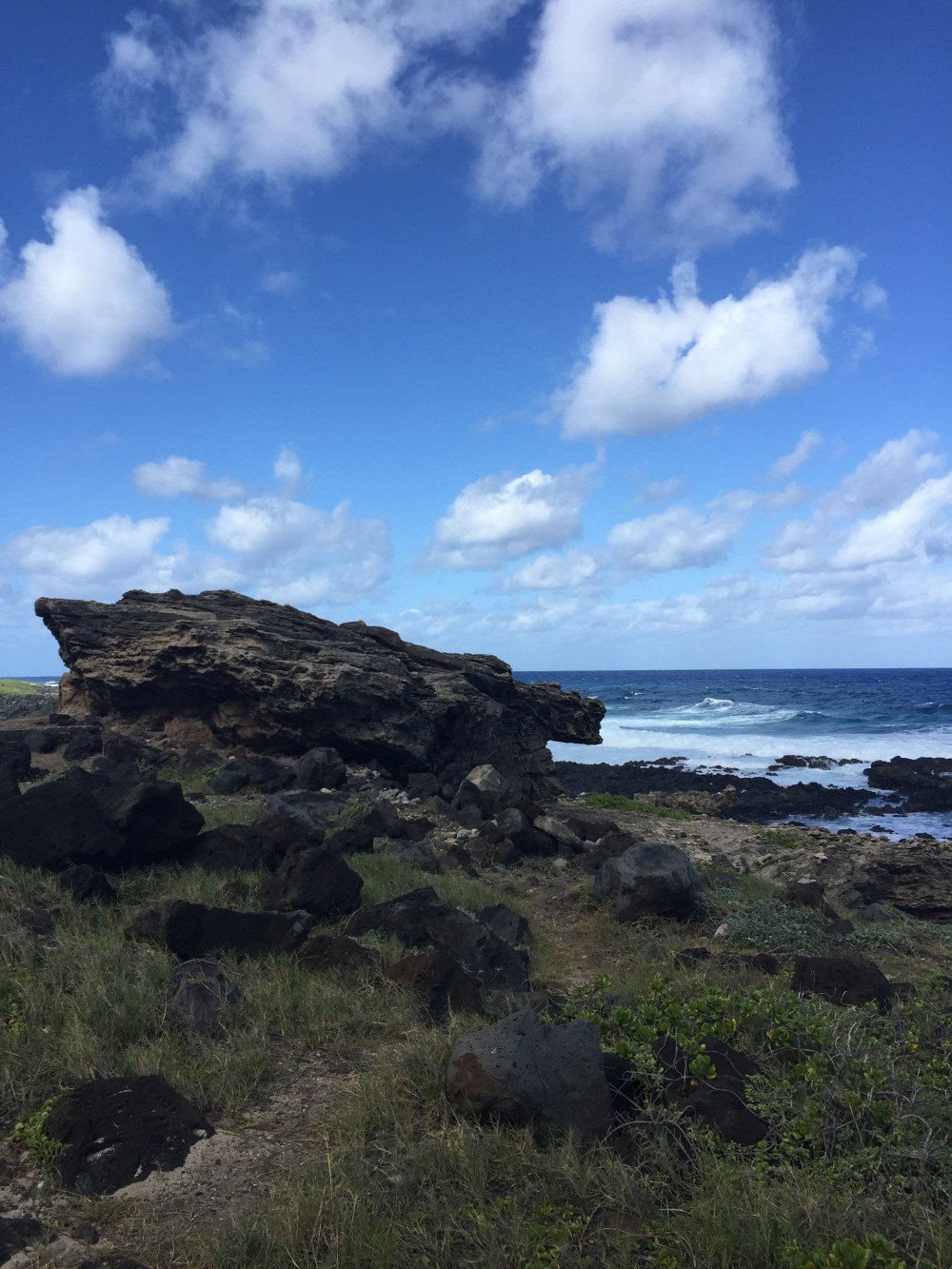
Rock formation along the 3.5-mile hike out to the point. (Some say this very rock is the “leina a ka uhane” – the souls leaping place to the afterlife.)
Now, this hallowed place has been given back to the birds, who were here long before any human ever was. Yesterday, watching in wonder as the albatross soared above the native vegetation that has rebounded on this windswept tip of the island, I imagined the shadows and sounds of souls leaping . . . soaring actually. Just like the black and white seabird overhead.
 makuleroad